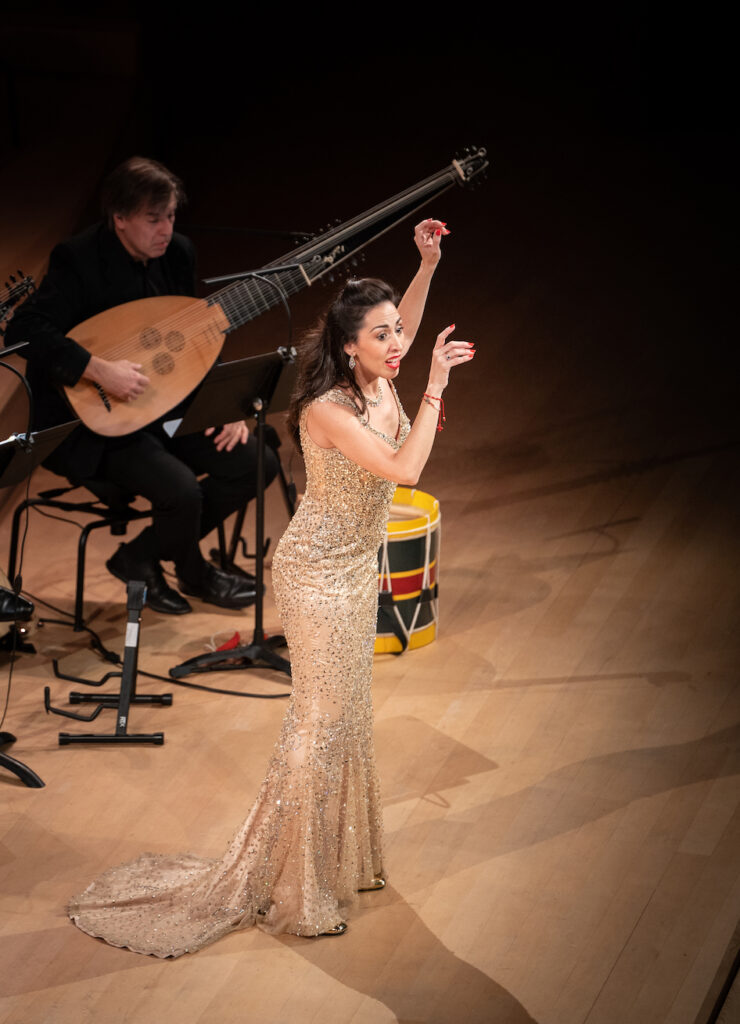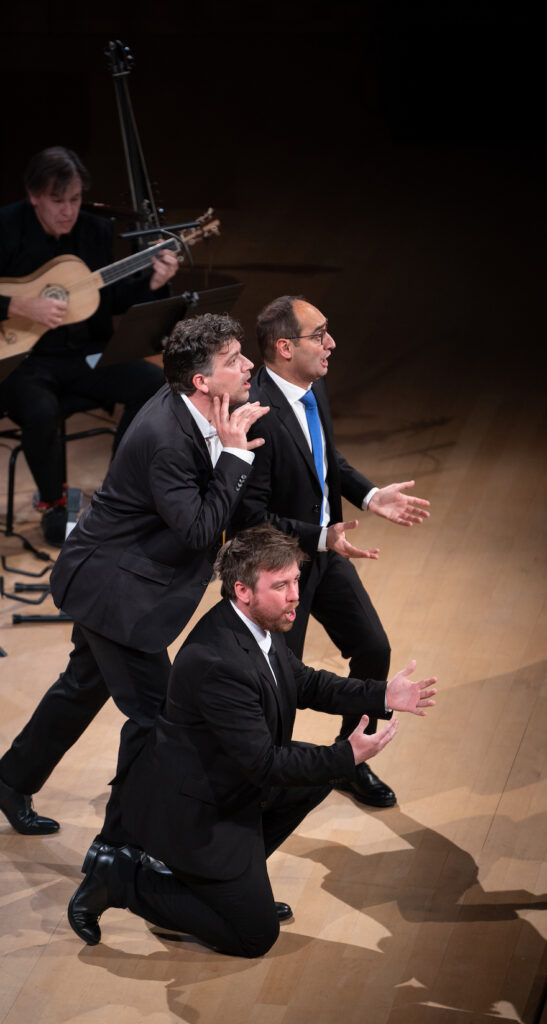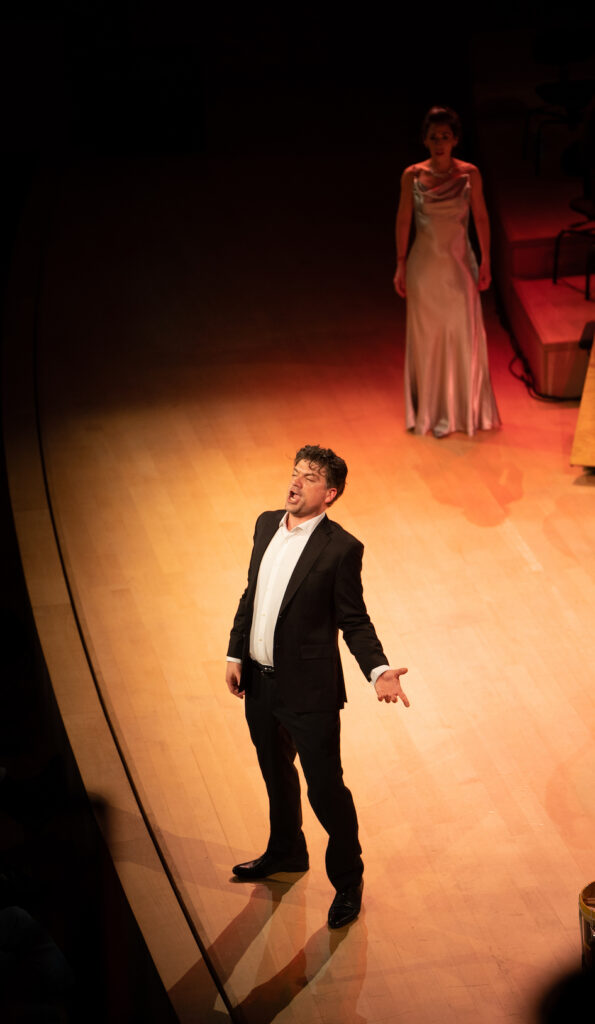
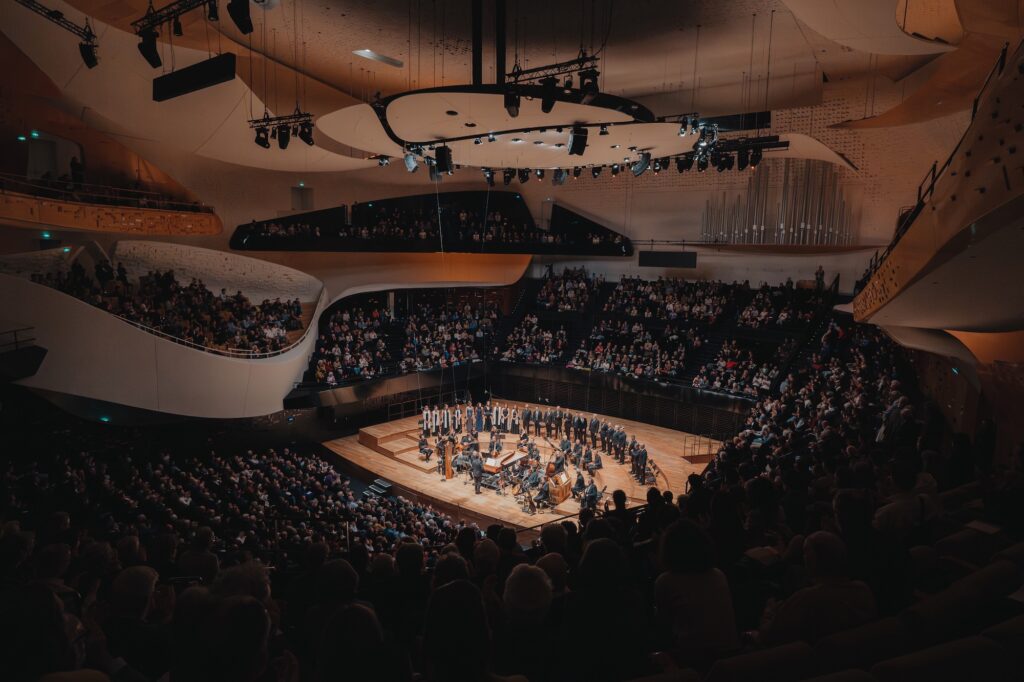

Discrètement mise en espace, cette version de concert exalte l’essence dramatique d’une musique mise en valeur avec la science et l’instinct auxquels on reconnaît l’art du chef argentin et de son ensemble.
Gilles Charlassier, Olyrix

Si l’Orfeo est le premier opéra majeur de l’Histoire, toute sa veine théâtrale coule dans la musique. La présente lecture en livre la quintessence.
Matthieu Roc, Res Musica

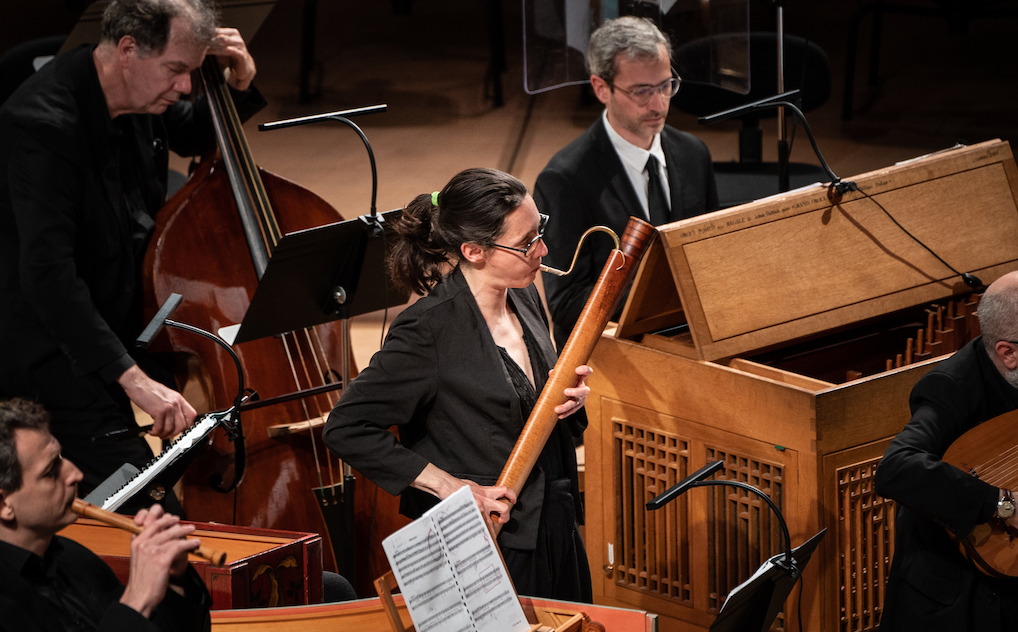
Les musiciens de la Cappella Mediterranea font palpiter les émotions sous la direction de Leonardo García-Alarcón, au clavecin, qui a tant côtoyé cette favola in musica avant de l’enregistrer. La richesse du continuo s’appuie sur le chatoiement des cordes pincées qui trament l’harmonie. Celle du Choeur de chambre de Namur ravit par la plénitude des équilibres vocaux et l’osmose avec tous.
Sabine Teulon Lardic, Classica
None of this would have been possible without Monteverdi’s genius. He could transmit every slight inflection and emotion produced by the text in music, with incomparable artistry and mastery. Although the forms he was working with were so diverse, he was able to arrange musical and dramatic sequences with great coherence. By combining different stylistic elements drawn from both new (monodic) and old (polyphonic) music, he produced a mind-blowing amalgam. It was so innovative that almost four centuries later, we can still feel the same admiration and awe that struck the audience that first had the privilege of witnessing this phenomenon on 24 February 1607. There can be no doubt. The operatic genre was born with a masterpiece.
19h30
Auditorio Nacional de Música
Madrid, Spain
Accéder à la billetterie
20h00
Teatro de la Maestranza
Séville, Espagne
Accéder à la billetterie
20h00
Teatro de la Maestranza
Séville, Espagne
Accéder à la billetterie
19h00
Teatro de la Maestranza
Séville, Espagne
Accéder à la billetterie
20h00
Namur Concert Hall
Namur, Belgium
Accéder à la billetterie
Favola in musica in a prologue and five acts.
Music by Claudio Monteverdi (1677–1643)
Libretto by Alessandro Striggio, created in 1607 at the Palazzo Ducale in Mantua.
Performance running time: approx. 2 hours and 10 minutes with intermission.
Valerio Contaldo, tenor – Orfeo
Mariana Flores, soprano – Musica, Euridice
Coline Dutilleul, mezzo-soprano – La Messagiera
Anna Reinhold, mezzo-soprano – Proserpina, Speranza
Edward Grint, basse – Plutone
Salvo Vitale, bass – Caronte
Alessandro Giangrande, tenor– Pastore, Apollo
Matteo Bellotto, bass – Pastore
Nicholas Scott, tenor – Pastore, Spirito, Eco
Leandro Marziotte, countertenor – Pastore
Estelle Lefort, soprano – Ninfa
Philippe Favette, bass – Spirito 2
Chœur de chambre de Namur
Cappella Mediterranea
Leonardo García-Alarcón, Musical direction
“The score of L’Orfeo reveals how innovative the work was and allows us to understand how building upon the rough sketches of his predecessors, Monteverdi developed an operatic model that would be used by generations to come. We can see how concerned he was with theatrical expression and its various modes, as well as instrumental colours and how they can be used to express certain moods, and even some aspects of staging. […]
Monteverdi was able to create such depth, thanks to his mastery of the polyphonic style. He managed to produce the imposing and terrifying effect of a double choir with five voices alone. […]
What can I say? When voices are silent, it is the music that speaks. There are no more words, just the expression of pain in an instrumental line that is supported by a bass that rises than falls in chromatic movements. […] Questions remain. The score provides us with some answers, but not all. It is the performer’s role to take the score and bring it back to life once again.”
Jérôme Lejeune
“Monteverdi fully exploits the rich colours that are typical of the Baroque period. Using a centrifugal force, he directs an explosion of light towards all points of the universe. His Orfeo is masterful. He had the good fortune of being able to work with a libretto as rich as Striggio’s. Although very little has been said about it, we can imagine how the text must have ignited the composer’s creativity. L’Orfeo forces us to confront humanity itself. If life, death, love and music are the driving forces behind humanity, L’Orfeo may be the opera that best embodies them. Only music can bring us into dialogue with the afterlife and lead us on a search for our lost loved ones. Monteverdi was the first great orchestrator. That skill that would later disappear with Venice’s public opera, which reduced orchestration to violins, a few lutes and a harpsichord. L’Orfeo represents a sort of ideal. A desire to utilize all the instruments and colours in the world.”
Leonardo García-Alarcón
“The visual austerity of the venue is matched by its extraordinary acoustics (designed by Eckhard Kahle), which extend to every corner of the hall; for this Orfeo, a simple (yet meticulously crafted) staging results in the most eloquent of interpretations, with its revelations and mysteries.”
Martine Mergeay for La Libre
See full article
“Leonardo García Alarcón is the linchpin of this performance. Through his inspired conducting, he brings out the very best in all the performers. He knows the score inside out and delivers a dynamic, subtle interpretation, whilst exploring a wide range of nuances and distinct characteristics. The audience, which has turned out in force as the hall is packed, gives the performers a warm and prolonged ovation. A standing ovation follows almost immediately, and it is richly deserved.”
Thimothée Grandjean for Crescendo Magasine
See full article
“Merit or result in the pursuit of a total spectacle, but also the musical wonder that the Argentine maestro managed to convey. Dressed as a croupier, he succeeded in transforming the German orchestra into a chromatic, poetic and dynamic marvel. […] The beauty of the recitatives was as moving as the opulence of the brass section.’”
Rubén Amón for El confidencial
See full article
“After several concerts and the recording of an album, conductor Leonardo García-Alarcón and his ensembles are perfectly in tune. The rapport with the Cappella Mediterranea and the Chœur de chambre de Namur is symbiotic: each performer knows their own part and those of the others inside out, and the cohesion is flawless. For the audience, this results in perfect clarity, allowing them to discover or rediscover a wealth of wonders, subtleties of composition and refinements of structure. The tempo is energetic, and the dynamics perfectly measured. This gives the joyful passages and dances an irresistible pulse, and the dramatic moments a striking tragic dimension. For example: this distortion of time, when Orfeo learns the terrible news, has a formidable effect. But what dominates the entire evening is clarity, light, and the joy of performing and singing such a masterpiece.”
Matthieu Roc for Resmusica
See full article
“In the title role, Valerio Contaldo’s vocals are dense and darken at the right times with mournful distress. The grain of his voice can be gravelly, and this enhances the texture of a vocal performance that is centred on the impact of sung declamation. L’Orfeo may be the first great opera in history, but its theatrical vein runs in the music. This interpretation delivers its quintessence.”
Gilles Charlassier for Olyrix
See full article